
"Dutch coffee smuggling"
200 article(s) found

Flavor description of washed Yegakochel Coffee beans Variety treatment in Grinding scale production area
Description of the flavor of washed Yegakochel coffee beans Africa is the hometown of coffee. Coffee trees are likely to be found in Ethiopia's KAFFA province. Later, batches of slaves were sold from Africa to Yemen and the Arabian Peninsula, and coffee was taken everywhere along the way. To be sure, in the 15th century or earlier, Yemen

Boutique Coffee introduction to 53 Coffee producing areas in the World 5
thirty-five. Tanzania gourmet coffee has soft acidity and attractive aroma, which is absolutely worth enjoying. Coffee exports from Tanzania (Tanzania) play an important role in the whole national economy. Bean-shaped berry coffee is very productive and is said to be more fragrant than ordinary coffee. Generally speaking, the coffee beans in Tanzania have an extraordinary quality. For example, begging nearby

Brief introduction of Grinding scale for description of Standard Flavor of washed Cochell Coffee beans
A brief introduction to the Grinding scale for describing the Standard Flavor of washed Cochel Coffee beans A strict standard of Jiji red fruits (as a result of coffee trees) is set by sun exposure. Unripe green fruits or defective fruits are manually removed before exposure, and damaged or moldy fruits are removed in the process of tanning. After two weeks, the flesh sugar and essence are all infiltrated into the coffee beans, and the water content is reduced to 12%. Then harden the fruit.

Flavor description of Yejia Coffee Cochel Solar G1 Coffee beans Grinding scale Origin of varieties
Description of the flavor of Yega Coffee Cochel Solar G1 Coffee beans the producing area of Kochere Kochel is located in the southwest of Ethiopia, 25 miles to the north is the famous town of Yega Chefen, the production mode is mainly based on local small farmers sending the output batches to the cooperative for unified treatment. About 100000 people in the local village of Chalalacktu depend on coffee for a living, and related production activities become him.
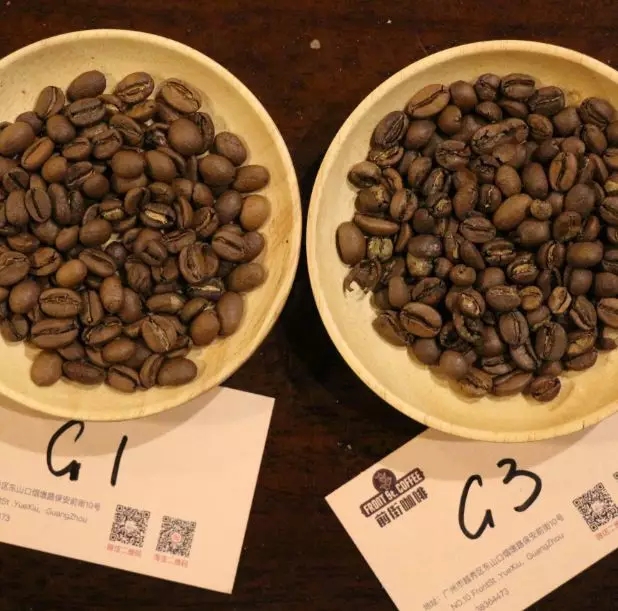
What is the difference in flavor between G1 and G2 in Yega Chenkee Cochel Solar?
Yega Chenkee Cochel Solar G1 and G2 in flavor difference lies in where to plant height: 1700m above sea level raw bean processing method: Dry Process solarization international score: 88.6baking degree: medium and shallow baking packaging: one-way valve Kraft paper (with zipper) packaging suggested using utensils: hand flushing, smart cup, American dripping filter, siphon, French pressure, love pressure, mocha pot and other appliances

A Brief Introduction to the Processing Method of Grindness and Roasting Degree of St. Helena Coffee Beans Courted by Napoleon on His deathbed
The Island of St Helena was discovered on May 21, 1502 by Portugal Admiral Joao da Nova, who landed in what is now Jamestown and built a chapel. For more than 80 years, the Portugal kept the island secret, but used it as a resupply point for their East India fleet. HM, 1588

A brief introduction to the flavor and aroma characteristics of St. Helena coffee begged by Napoleon on his deathbed
Once, the French proudly announced to the world that they had their own coffee, that their coffee did not come from Arabia, but that it was the original creature of their native Bourbon island, and that their coffee was naturally different from Arabica coffee. I wonder if it was intentional or ignorant of the French at that time, and it really made most people think that Bourbon Coffee was really native to Bourbon.

The origin of coffee beans coffee practice introduction
Legends about the origins of coffee vary, but most of them are forgotten because of their absurdity. However, it should not be forgotten that Africa is the home of coffee. Coffee trees were most likely discovered in Ethiopia's KAFFA province. Later, groups of slaves were sold from Africa to Yemen and Arabia, and coffee was taken to various places along the way. may

A brief introduction to the cultivation of St. Helena coffee beans, geographical location, climate and altitude, which Napoleon begged on his deathbed.
After Napoleon, 26, was appointed commander-in-chief of the Italian Front Army of the French Republic in 1769, he led the army of the French Republic and made many outstanding achievements. But the outstanding record did not bring the great strategist a glorious second half of his life. After the defeat of Russia, the great man fell to the bottom from the peak. After Waterloo in 1815

Description of G1 Flavor of washing Yejia Xuefei A brief introduction to the varieties produced by grinding scale
Washing Yega Xuefei characteristics G1 flavor description taste grinding scale production area brief introduction of baking degree: the defect rate of raw beans in this batch is relatively low in terms of sun-cured beans, the aroma is also very good, the default setting is medium-shallow baked goods. The dry powder has a strong berry aroma, which can feel a little sweet. The entrance can feel a touch of refreshing wine, or a typical citrus aroma

A brief introduction to the cultivation of St. Helena coffee beans, geographical location, climate and altitude, which Napoleon begged on his deathbed.
Although St. Helena Coffee enjoyed high praise in the 19th century, the popularity of St. Helena Coffee did not continue, and even St. Helena Islanders rarely drank it afterwards. When David R.Henry visited St. Helena Island in 1986, he was honored to taste the island's coffee with the Governor of St. Helena Island, which produced very little coffee and was grown by the Governor in St. Helena.

A brief introduction to the History and Culture of the Origin and Development of St. Helena Coffee begged by Napoleon on his deathbed
Napoleon, as a coffee fanatic, came ashore and lived in Longwude Manor, where he began to write memoirs, dictated by him, and recorded and sorted out by the adjutant brought with him. During his exile from 1815 to 1821, the French dwarf praised St. Helena's coffee. As a result, St. Helena's coffee began to attract the attention of the world, and formed in Paris.

30 ways to drink coffee in other countries
PHARISER: 1/4 cups of coffee, 1 cube of sugar, 2 small cups of rum, whipped cream EISKAFFEE: iced coffee, 2 handmade vanilla ice cream balls, whipped cream, chocolate powder Germany is the world's second largest importer of coffee, after the United States. But initially, coffee shops appeared only in the two northern port cities of Bremen and Hamburg. Berlin until 1721

Description of Flavor of Sunshine Yega Chuefei and aricha Coffee; introduction to the characteristics of Grinding degree
We will not forget that Africa is the hometown of coffee in the sun, Yega Chefe and aricha. Coffee trees are likely to be found in Ethiopia's KAFFA province. Later, batches of slaves were sold from Africa to Yemen and the Arabian Peninsula, and coffee was taken everywhere along the way. To be sure, Yemen started growing coffee in the 15th century or earlier. Ah

A brief introduction to the treatment method of grinding degree and baking degree of St. Helena coffee beans begged by Napoleon on his deathbed.
In the 15th century, the great navigation era began with the rapid development of world trade. In order to compete for unknown trade opportunities in the world, various explorers were driving their majestic sailboats, adventurous spirits and desirable commodities. Embarked on the voyage of conquering the sea. In the 17th century, the British discovered coffee as a magical plant as far away as Yemen, and its charm conquered

Boutique Coffee Raw beans the latest Coffee Bean introduction Coffee Raw Bean History details
Raw coffee beans are the seeds of coffee trees. It is the wealth hidden in coffee cherries (coffee berries) that people usually call coffee cherries. They are mistakenly called beans because they are similar to the beans we usually see, but they are actually the seeds of coffee. Usually there are two flat oval coffee beans in the coffee berries, and there is only one in a few coffee berries.

Introduction of coffee-producing countries in Africa, the hometown of coffee-Yegashifi Coffee Manor in Ethiopia
Africa is the hometown of coffee. Coffee trees are likely to be found in Ethiopia's KAFFA province. Later, batches of slaves were sold from Africa to Yemen and the Arabian Peninsula, and coffee was taken everywhere along the way. To be sure, Yemen started growing coffee in the 15th century or earlier. Although Arabia had the busiest port city in the world at that time

Description of flavor of Yejia Coffee Cochel Coffee by washing method
Yega Chet Coffee Coffee Flavor description by washing method the flavor of Yejia Coffee Coffee is described in the producing area. Yejaschuffe itself is a small town with a population of about 20, 000, with three neighboring small producing areas of Wenago, Kochere and Gelena Abaya. Because the flavor of the coffee is almost the same as that of Yejasuffe, it is also classified into the region of Yejasuffe. Yega snow caffeine, whether it's culture.
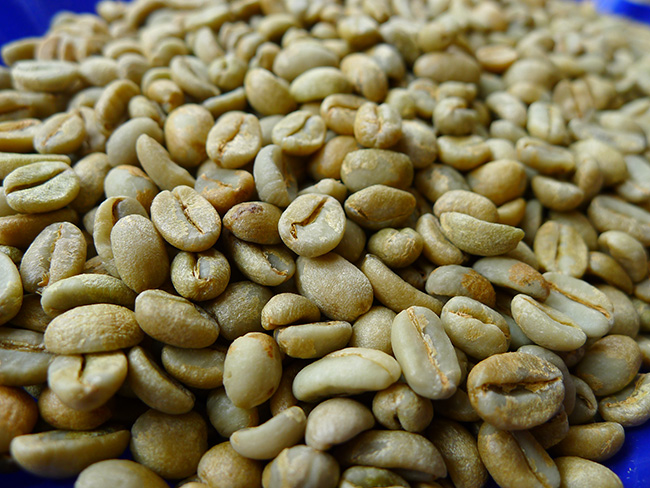
The cultivation of coffee beans the history of coffee beans the cultivation of raw coffee beans
Coffee raw beans are the seeds of coffee trees. It is the wealth hidden in coffee cherries (coffee berries) that people usually call coffee cherries. They are mistakenly called beans because they are similar to the beans we usually see, but they are actually the seeds of coffee. There are usually two flat oval coffee beans in the coffee berries, and a small number of coffee berries

Introduction to exquisite Ethiopian coffee beans
When it comes to Ethiopia, let's first talk about the origin of coffee. In about the sixth century, when Kardai, an Arab shepherd, was driving sheep to the Ethiopian prairie for grazing, he was very excited and excited to see each goat. He felt very strange. Later, after careful observation, he found that these sheep were excited only after eating some kind of red fruit. Cardai was curious.